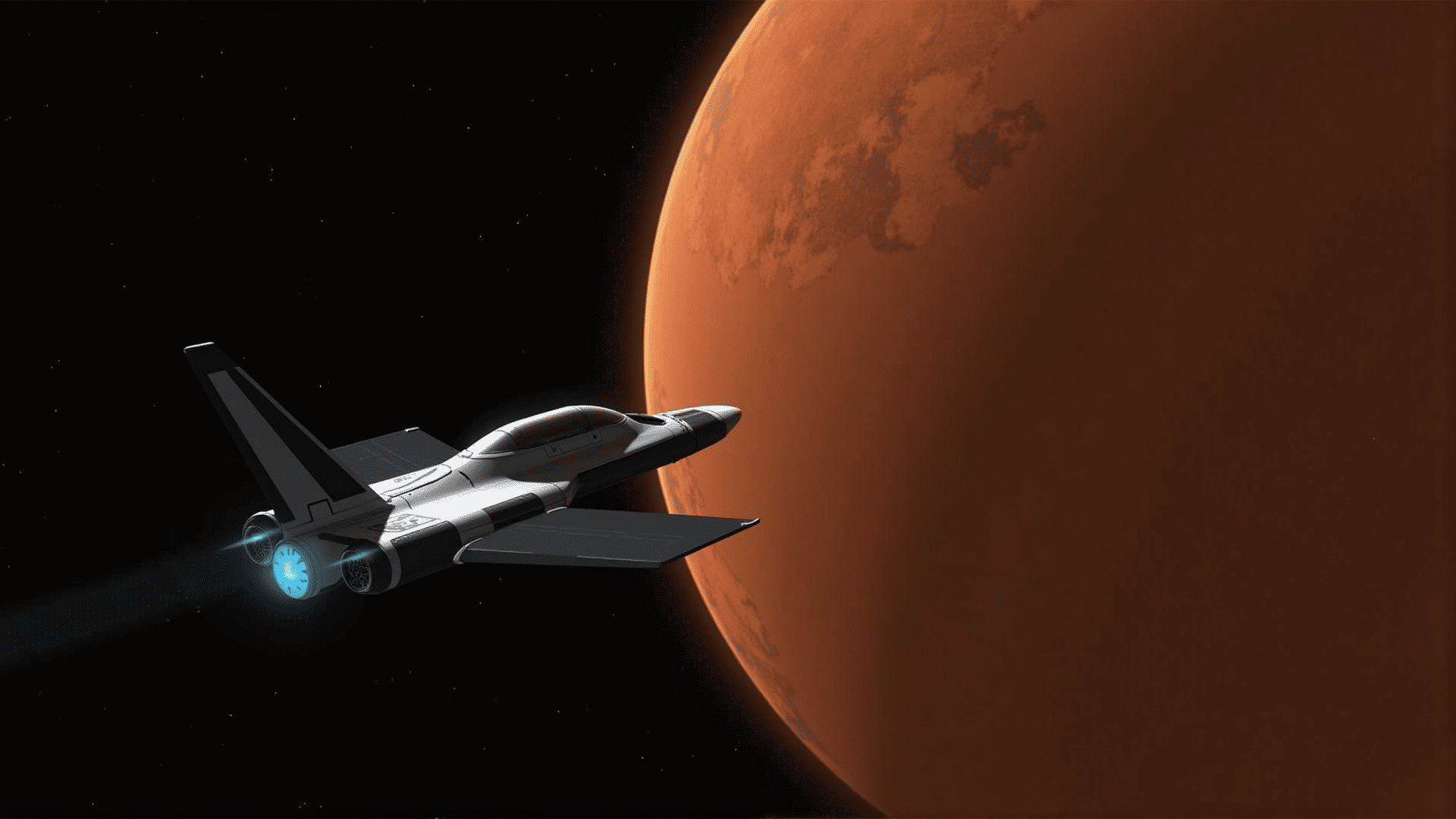
As humanity gazes towards the heavens, the Red Planet emerges as the next frontier for space exploration. Mars, with its tantalizing mysteries and potential for future habitation, is driving a new era of innovation and ambition in space technology. Recent advancements are steadily paving the way for human missions to Mars, marking a significant leap in our quest to explore the cosmos.
One of the pivotal developments in recent years is the evolution of space propulsion systems. Traditional chemical rockets, though reliable, have significant limitations in terms of speed and efficiency. However, breakthroughs in propulsion technology, such as ion thrusters and nuclear thermal propulsion, promise to drastically shorten the journey to Mars. Ion thrusters, which have been successfully tested in various satellite missions, can provide continuous thrust for extended periods, potentially reducing travel time. Meanwhile, nuclear thermal propulsion, leveraging the immense energy of nuclear reactions, offers the possibility of faster transits, making human expeditions to Mars more feasible and safer.
Equally significant are advancements in spacecraft engineering and materials. Engineers are now developing lighter, stronger materials that can withstand the harsh conditions of space travel and the challenging environment of Mars. Innovations such as advanced composites and radiation shielding technologies are critical to ensuring the safety and sustainability of long-duration missions. Additionally, modular spacecraft designs are being explored, allowing for components to be assembled or replaced during the mission, adding a layer of flexibility and adaptability to long-haul space travel.
Life support systems, essential for human survival in space, have also seen substantial advancements. Autonomous habitat modules capable of recycling air, water, and waste are being developed, minimizing the need for resupply missions from Earth. These systems are often tested on the International Space Station (ISS), serving as a proving ground for ensuring reliability and efficiency. Furthermore, significant progress in artificial intelligence and robotics continues to enhance the capability of these systems, allowing them to self-adjust and optimize based on the conditions and requirements of the crew.
Mars exploration also demands innovations in landing technology. The planet's thin atmosphere makes traditional landing methods challenging. In response, NASA and private enterprises are pioneering techniques like supersonic retropropulsion and inflatable heat shields to ensure safe and precise landings. These technologies will not only support landing large payloads but will also enable repeated use of landing systems, a crucial factor for sustained missions to Mars.
Moreover, communication systems are being overhauled to cope with the immense distance between Earth and Mars. The delay in communication signals poses a challenge for real-time exchanges, necessitating advancements in autonomous navigation and decision-making technologies. Enhanced communication satellites and networks are essential to maintain a steady link between the two planets, supporting data transfer vital for mission success.
The role of international collaboration cannot be understated in the race to Mars. Agencies like NASA, ESA, Roscosmos, CNSA, and private entities such as SpaceX and Blue Origin are contributing unique capabilities and resources to the endeavor. Collaboration efforts, such as the Artemis Accords and partnerships with the private sector, are paving the way for shared research, technology development, and the creation of international space policies well-suited for multi-agency missions.
As these tech-driven strides continue to unfold, humanity stands on the cusp of a monumental leap in space exploration. The convergence of cutting-edge propulsion systems, innovative spacecraft technologies, advanced life support, and resilient landing mechanisms is creating a framework where human missions to Mars are becoming increasingly plausible. In the not-so-distant future, this dream could evolve into reality, setting the stage for larger-scale exploration and even the potential colonization of Mars, marking an indelible chapter in the story of human exploration.